BASEBALL 9
- 4.6
- Rating
- 50.00M
- Installs
- Free
- Price

 Analysis by App-foxy
I spent time with BASEBALL 9 expecting a simple mobile sports game, but its appeal is more specific than that. It is a compact baseball experience built around creating a team, playing matches, and gradually making your squad feel like your own. The controls are approachable enough for short sessions, while the team-building layer gives me a reason to return after a game ends. It is free to play, rated for Everyone, and available from Android 5.0 onward, so it is aimed at a broad audience rather than only serious baseball fans.
What makes it easy to recommend is the balance between direct play and management. I am not just watching numbers rise or tapping through a simulation. I still need to make decisions during games, but I also have a longer-term reason to care about the roster. That combination gives the app more staying power than many quick sports titles. At the same time, it is important to approach it with the right expectations: this is a stylized mobile baseball game, not a full console-style simulation with every league, broadcast detail, and licensing feature.
How the current version feels to play
The current release is version 3.8.7, developed by playus soft. The game has grown into a well-established sports title, with an average rating of 4.6 from around 462 thousand ratings and more than 10 million installs. Those figures do not automatically make a game good, but they do match my impression that the core loop is easy to understand and satisfying enough for a large audience.
You May Also Like

 Google Keep - Notes and lists
Google Keep’s Quiet Growth Shows the Appeal of Simpler Notes
As mobile work gets busier, Google Keep keeps winning a simple contest: capture a thought quickly, find it later, and get on with the day.

 Blood Strike: 2.5 Anniversary
Blood Strike’s Loadouts Turn Every Drop Into a Tactical Gamble
A close look at Blood Strike’s custom loadouts: how fast access to signature weapons reshapes its battle royale rhythm, rewards preparation, and narrows the gap between fights.

 Pandora - Music & Podcasts
Pandora’s Music Is Easy to Start, but Harder to Recover
Pandora’s strength is its low-effort path from a seed to a station. Its weak spot is how much confidence it asks you to place in connection, setup, and quiet recovery.

 8 Ball Pool
 Is Built on Rivalries, Rematches, and Routine
A close look at the rivalries, rematches, shared routines, and unanswered safety questions that turn a quick pool match into a persistent mobile community.

 Samsung Music
’s Quiet Strength Is Playing What You Already Own
Its reach comes less from spectacle than from dependable access to a personal library. That simplicity is both the app’s strongest retention engine and its ceiling.

 AccuWeather: Weather Radar
AccuWeather Review: A Quick, Clear Forecast for Everyday Decisions
For everyday plans, the best forecast is the one you can understand quickly. AccuWeather makes rain timing, radar, and local conditions easy to act on, with a few trade-offs.
More From Our News Desk



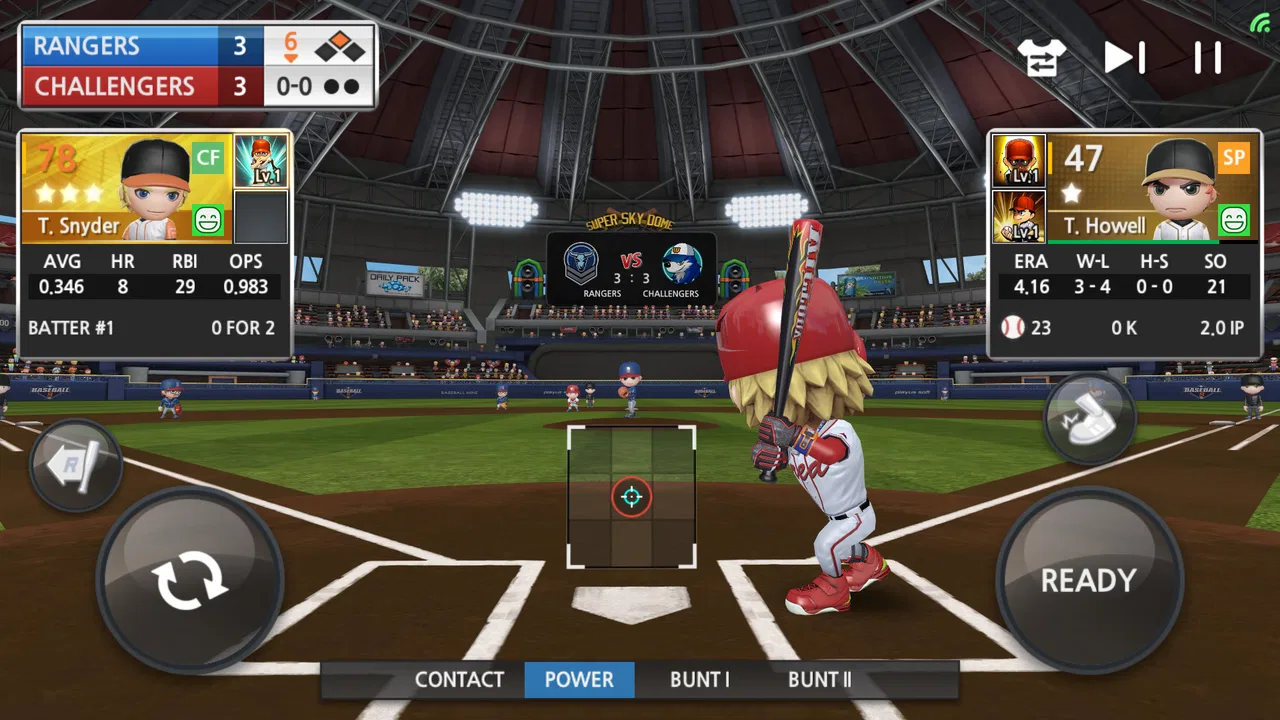
The first thing I noticed is how quickly a session can begin. BASEBALL 9 does not ask me to learn a complicated control scheme before I can enjoy a match. Batting and pitching are presented in a way that lets a newcomer get involved almost immediately, while better timing and smarter choices still matter. I found that useful when playing in short bursts: a few minutes can feel worthwhile, but a longer session can naturally turn into several games because I want to improve the team or recover from a poor result.
The visual style also supports that accessibility. It is not trying to recreate a televised baseball broadcast. Players and stadium elements have a simplified, game-like appearance, which keeps the screen readable on a phone. I can usually tell what matters without being buried under visual effects. That clarity is valuable during fast moments, especially when I am focusing on a pitch or trying to understand what happened after contact.
The best part of the design is the relationship between individual matches and team progress. Building a team gives the games context. A win feels useful because it contributes to the direction of my roster, while a loss can expose a weakness I need to address. I enjoy that more than sports games where every match feels disconnected from the one before it.
Why the team-building loop matters
The central attraction is not simply hitting home runs. It is the feeling that I am shaping a club over time. I can think about which parts of the lineup need attention, where my pitching is letting me down, and whether a short-term improvement is worth pursuing. Even when the game keeps the presentation light, those choices create a satisfying sense of ownership.
One useful habit is to treat each match as a small test rather than judging the whole team by the final score. If I am losing because opponents are consistently reaching base, the answer may not be another powerful hitter. If my offense is productive but I cannot protect a lead, improving the pitching side makes more sense. This sounds obvious, but the game becomes more interesting when I use results to diagnose the roster instead of chasing upgrades randomly.
I also recommend resisting the urge to change too many things at once. When several players or areas are improved together, it becomes difficult to tell what actually helped. Making one meaningful adjustment, then playing enough to observe its effect, gives the progression system more practical value. That approach is especially helpful for players who want to enjoy the management side without turning the game into a spreadsheet.
Another small but important point is that team development changes the emotional rhythm of the game. A close match feels different from a routine win because I am more aware of the roster’s strengths and weaknesses. That is where the title separates itself from a purely casual batting game: the match is the immediate activity, but the team is the longer story.
Controls that reward attention without demanding expertise
The controls are designed for touchscreens, and I found them comfortable for the intended style of play. They do not require the precision or button combinations of a traditional console baseball game. That makes the title suitable for people who enjoy baseball but do not already understand every tactical detail of the sport.
However, accessible does not mean completely automatic. Timing still affects the quality of an at-bat, and pitching requires attention rather than mindless tapping. I got more consistent results when I slowed down and watched the situation instead of treating every delivery as an opportunity to act immediately. That is one of the game’s less obvious strengths: it teaches patience through play, without presenting itself as a formal tutorial lesson.
For beginners, I would suggest focusing first on reading the flow of an at-bat. Trying to control every possible outcome at once can make the game feel busier than it is. Once the basic rhythm becomes familiar, it is easier to notice when a decision is genuinely important and when the sensible choice is simply to let the play develop.
Experienced baseball players may find the controls too simplified if they want a deep recreation of real-world strategy. The game gives me meaningful choices, but it does not aim to reproduce every layer of professional baseball management. That trade-off is deliberate and, in my view, appropriate for phones, though it will disappoint anyone looking for a highly technical simulation.
A realistic everyday use case
I can easily see myself using this as a commute or lunch-break game. A short session is enough to play part of the broader team journey, and the simple presentation means I do not need a quiet room or a large screen to understand what is happening. If I have more time in the evening, I can continue for longer and pay closer attention to roster decisions.
It also works well for someone who wants a sports game that does not demand constant online interaction with other people. The appeal is personal progression: I am improving my own team and learning the game’s rhythm at my own pace. That makes it less stressful than competitive multiplayer titles, where every match can feel like a test against another player’s schedule and skill.
On the other hand, I would not choose it for a group gathering where the main goal is local competition. Its strongest experience is the individual campaign-like loop of playing and developing a team, not the social energy of passing a controller around or facing friends in a live room.
What the evolution means for players
The release history gives the game a useful sense of maturity. It arrived on May 15, 2018, and the current version shows that it has continued as an active product rather than remaining a one-off experiment. I see that evolution mainly in the overall polish of the loop: the game understands that a mobile sports title must make both the match and the progression worthwhile.
For someone discovering it now, the benefit is that the experience feels established. The basic concept is clear, the presentation is focused, and there is enough structure to support repeated play. New users do not need to know how the game looked at launch to enjoy it, but the long-running nature of the title helps explain why its systems feel more settled than those in many short-lived mobile sports releases.
Existing users will probably judge updates differently. A new player notices whether the game is fun within the first few sessions; a long-term player notices whether the reasons to return remain convincing. That distinction matters. A stable core can be a strength, because players know what they are coming back to, but it can also make the experience feel familiar if they have already invested a great deal of time.
I would describe the current state as a polished, approachable baseball loop rather than a radical reinvention. That is not a criticism by itself. The game’s identity comes from the combination of playable matches and team construction, so preserving that balance is more important than adding complexity for its own sake. Still, players hoping for a dramatically different experience with every update should keep their expectations measured.
How it compares with other mobile sports options
Compared with arcade baseball games that focus almost entirely on quick batting, BASEBALL 9 gives me more reason to care about what happens between matches. The roster-building element adds continuity, and that makes a winning streak feel more meaningful than a single flashy hit. If I want a fast, disposable challenge, an arcade alternative may be quicker to understand. If I want a team I can gradually shape, this game is the better fit.
Compared with more realistic baseball simulations, it is easier to pick up and less intimidating. I do not need to learn a large set of controls or spend a long time configuring a match before playing. The cost of that convenience is depth. A dedicated simulation may offer a richer representation of tactics, leagues, player roles, and presentation, while this title focuses on making the essential baseball decisions work well on a touchscreen.
It also occupies a middle ground between a pure management game and a pure action game. A management-only alternative may provide more detailed statistics and planning but less direct involvement in each play. A control-heavy alternative may put me closer to the action but offer less satisfying long-term team ownership. This game is strongest when I want both elements in moderate amounts.
The free entry point makes that comparison more favorable for curious players. I can try the core experience without paying upfront, then decide whether the progression is worth my time. The trade-off is that in-app purchases range from $1.99 to $99.99 per item. That wide range is something I would take seriously before spending. I prefer to play long enough to understand the normal progression, identify the parts I genuinely enjoy, and only then consider whether an optional purchase improves my experience.
Where the friction appears
The simplified design can become a limitation after the initial novelty fades. Once I understand the basic rhythm, some matches may feel more routine, especially if I am looking for constant tactical surprises. The team-building loop helps, but it cannot completely remove repetition from a sports game built around playing many similar contests.
Another possible frustration is the gap between wanting a particular roster outcome and accepting the pace of progression. Players who enjoy gradual improvement will likely find that satisfying. Players who want immediate access to a highly developed team may feel pressure to spend or may simply lose interest. Because the game is free with optional purchases, I recommend deciding early whether I am playing for the journey or trying to rush toward a destination. The first mindset fits the design much better.
The age rating of Everyone is helpful for families and younger players, but it should not be confused with universal suitability. A child who likes baseball and simple touch controls may enjoy it, while a child who expects a highly animated, story-driven sports adventure may find the presentation restrained. Adults who want a serious simulation may have the opposite reaction: they may appreciate the clean interface but miss the depth and realism of larger console or PC titles.
Device compatibility is also broad because the minimum requirement is Android 5.0, but a compatible operating system does not guarantee that every phone will feel equally comfortable. Screen size, performance, and battery condition can affect how pleasant a sports game feels during longer sessions. I would especially consider whether the display gives me enough room to follow the action without covering important areas with my fingers.
Who should play it, and who should skip it
I think it is a strong choice for casual baseball fans, mobile players who enjoy gradual progression, and people who want a sports game that can be played in short sessions. It is also a good introduction for someone who knows the basic idea of baseball but does not want to learn a complicated simulation before having fun.
It suits players who like making small improvements over time. If you enjoy noticing that a weak part of the team is becoming more reliable, or if you like balancing immediate match decisions against longer-term roster goals, the design gives you plenty to work with. The experience is especially appealing when I let the team develop naturally rather than trying to optimize everything from the first game.
I would skip it if my priority is licensed real-world teams, a broadcast-style presentation, or deep competitive multiplayer. I would also look elsewhere if I dislike progression systems that may encourage optional spending. Even though the game can be entered for free, the presence of purchases means players who are sensitive to monetization should approach it carefully and set their own limits.
Finally, it may not be the right match for someone who wants every session to feel completely different. Baseball naturally involves repeated structures, and this game leans into that rhythm. Its pleasure comes from improving decisions and building attachment to the team, not from constantly changing the rules.
Practical ways to get more from the game
My first tip is to use losses as information. Instead of immediately blaming a single player, look for a pattern across several matches. Repeated problems are more useful than one unlucky result. This keeps progression focused and prevents resources from being spent on changes that only address a temporary bad game.
My second tip is to separate experimentation from serious progress. When I am testing a new approach, I do not judge it after one awkward result. Baseball has enough variation that a single match can mislead me. Giving a change several opportunities makes it easier to decide whether it genuinely improves the team or merely happened to coincide with a win.
My third tip is to play according to the length of the session. In a short break, I focus on the immediate match and avoid making rushed roster decisions. When I have more time, I review the team’s needs and think about what I want to improve next. This simple separation makes the game feel less cluttered and reduces the temptation to spend or change direction impulsively.
I would also keep expectations realistic around purchases. The most satisfying part of the game, in my experience, is learning the rhythm and watching the team develop. Buying something may speed up a goal, but it cannot replace the small decisions that make the roster feel personal. If I ever spend, it should be because I already understand what I want, not because a difficult match has made me impatient.
What I would watch going forward
For future development, I would pay attention to how playus soft keeps the progression fresh for long-term users. The current foundation works because matches, team identity, and improvement support one another. Any future changes would be most valuable if they deepen those connections without making the controls intimidating or the interface crowded.
I would also watch the balance between free progression and the in-app purchase structure. A free sports game needs a sustainable way to support development, but players should still feel that patience and skill have real value. The best outcome would be a system where optional spending remains optional in practice, especially for users who are happy to build their team gradually.
Another area worth watching is how the game serves different audiences at once. Beginners benefit from simplicity, while experienced players need enough variation to stay interested. Adding depth carefully would be better than simply adding more menus. The title does not need to become a full simulation to remain engaging; it needs to preserve the quick readability that makes it work on mobile.
After playing it, my view is straightforward: BASEBALL 9 is at its best when you want a personal baseball project, not a complete professional broadcast simulation. I like the way a short match connects to a longer team-building goal, and I appreciate that the controls let newcomers participate without removing all room for judgment. The repeated structure and possible monetization pressure are real drawbacks, but they are manageable if I play patiently and know what kind of experience I want.
With its Everyone rating, free starting point, broad Android compatibility, and established version 3.8.7 release, it is easy to try. I would recommend it to a friend who wants approachable sports gameplay with more persistence than a one-minute arcade challenge. I would point a simulation enthusiast toward a deeper alternative instead. For the right player, though, the simple pleasure is convincing: play a game, notice what went wrong, adjust the team, and come back ready to see whether the next result feels earned.
FAQs for BASEBALL 9
01What is BASEBALL 9 and what makes it unique?
BASEBALL 9 is a fast-paced mobile baseball game available for both Android and iOS platforms. It stands out due to its realistic gameplay mechanics and engaging graphics. Unlike other baseball games, it offers a blend of arcade-style play with strategic elements, making it appealing to both casual gamers and baseball enthusiasts.
02Is BASEBALL 9 free to play, or does it require purchases?
BASEBALL 9 is free to download and play. However, it includes in-app purchases that allow players to enhance their gaming experience. These purchases can range from cosmetic upgrades to items that improve player stats. While optional, they can provide a competitive edge or speed up progression.
03Does BASEBALL 9 require an internet connection to play?
BASEBALL 9 can be played offline, making it convenient for users without a stable internet connection. However, certain features, such as leaderboards and multiplayer modes, require an internet connection to function. Playing online also allows you to access updates and special events.
04Can I customize my team and players in BASEBALL 9?
Yes, BASEBALL 9 offers a robust customization feature. Players can personalize their team’s uniforms, logos, and names. Additionally, you can upgrade and customize individual player stats and abilities, allowing for a tailored gaming experience that matches your strategy and play style.
05What are the system requirements for BASEBALL 9 on mobile devices?
For Android users, BASEBALL 9 requires Android 4.4 and above, while iOS users need iOS 10.0 or later. The game is designed to run smoothly on most modern smartphones and tablets. However, for the best experience, devices with higher RAM and processing power are recommended.
Pros
- Realistic gameplay and physics.
- Customizable team and players.
- Offline play available.
- Simple and intuitive controls.
- Frequent updates with new content.
Cons
- In-app purchases can be pricey.
- Graphics may seem basic to some.
- Limited multiplayer options.
- Ads can interrupt gameplay.
- Progress can feel slow without purchases.

BASEBALL 9
Gallery